

**The CFO’s Guide to Cost-Efficient Accounting Operations**
In today’s fast-moving business environment, CFOs are expected to do more than just manage numbers they are expected to drive efficiency, control costs, and support strategic growth. Yet many finance teams still struggle with outdated processes, manual work, and high operational costs.
Cost-efficient accounting operations are not about cutting corners. They are about building smarter financial systems that save time, reduce costs, and deliver better insights for decision-making. When accounting operations are optimized, CFOs can focus less on routine tasks and more on guiding the company’s financial future.
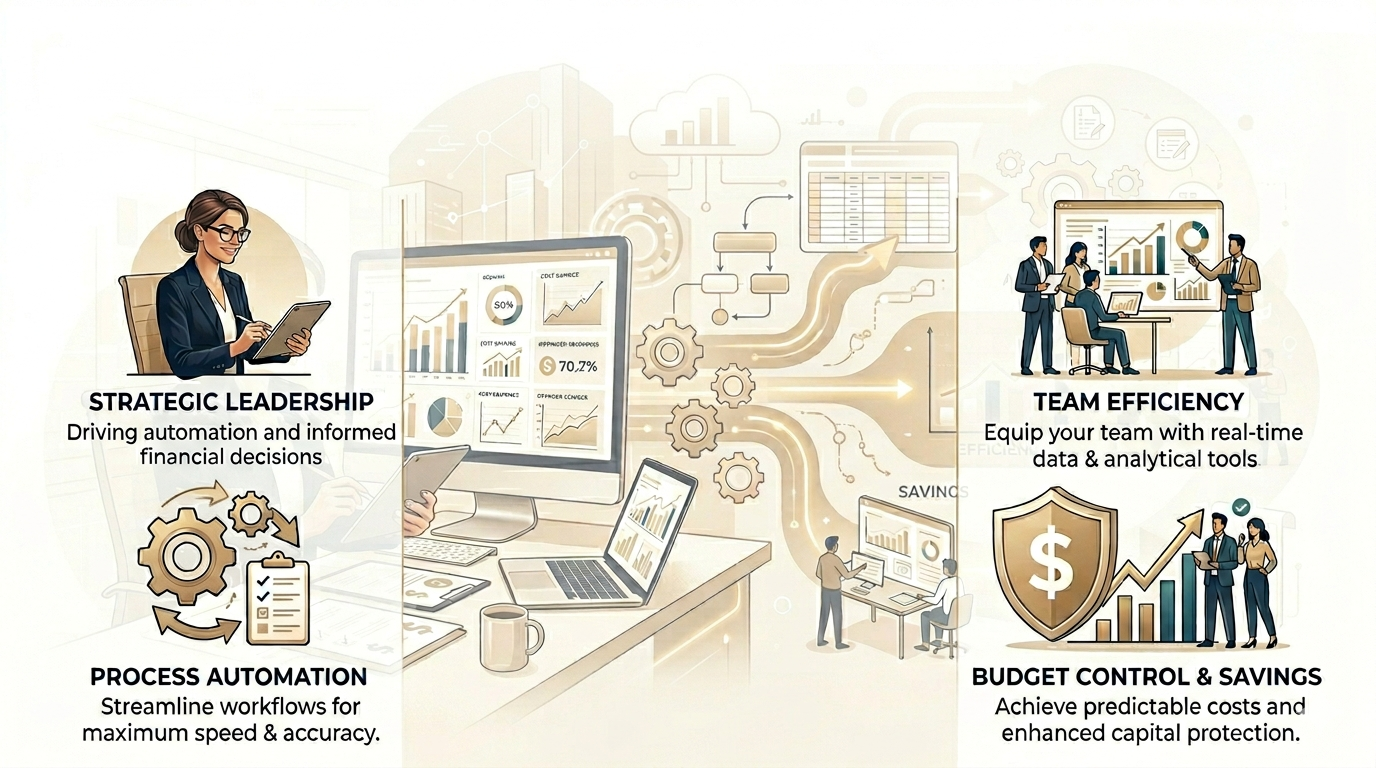
1. Shift from Manual Work to Smart Automation
One of the biggest cost drivers in accounting operations is manual processing. Tasks like data entry, invoice management, reconciliations, and reporting can consume countless hours of finance team productivity.
Modern accounting technology allows companies to automate these repetitive tasks. Automation tools can process transactions faster, reduce human error, and ensure consistency across financial records. For CFOs, this means lower operational costs and a more efficient finance department.
2. Build a Scalable Accounting Team
Hiring and maintaining a fully in-house accounting team can become expensive as the company grows. Salaries, benefits, infrastructure, and training costs add quickly.
Many CFOs are now adopting hybrid accounting models, combining internal finance leadership with offshore accounting support. This approach allows companies to access skilled accounting professionals while significantly reducing operational expenses. Internal teams can then focus on high-value activities such as financial planning, analysis, and strategy.
3. Use Real-Time Financial Data for Better Decisions
Cost efficiency is not only about reducing expenses, it is also about making smarter financial decisions. CFOs need clear visibility into company finances to identify cost leaks, track profitability, and manage cash flow.
Cloud-based accounting platforms provide real-time financial dashboards, allowing CFOs to monitor key metrics instantly. With better data visibility, finance leaders can respond faster to challenges and guide leadership teams with confidence.
4. Strengthen Financial Controls and Compliance
Efficient accounting operations must also maintain strong financial controls. Poor documentation, inconsistent processes, or compliance gaps can lead to costly errors, penalties, or audit challenges.
Standardized workflows, internal reviews, and clear financial reporting structures help ensure that accounting operations remain both efficient and compliant. This balance protects the organization while maintaining operational efficiency.
5. Turn Accounting into a Strategic Advantage
When accounting operations run efficiently, finance teams gain more time to focus on strategic work forecasting, cost optimization, and growth planning. Instead of simply recording financial history, accounting becomes a powerful tool for guiding the company’s future.
CFOs who prioritize efficient accounting systems create stronger financial foundations for their organizations. The result is improved decision-making, better cost management, and sustainable long-term growth.
Conclusion
Cost-efficient accounting operations are essential for modern businesses. By combining automation, smart team structures, strong financial controls, and real-time data, CFOs can transform accounting from a routine function into a strategic driver of business success.
Organizations that invest in efficient financial systems today will be better positioned to scale, adapt, and compete in the evolving business landscape.